
Last updated October 15, 2026
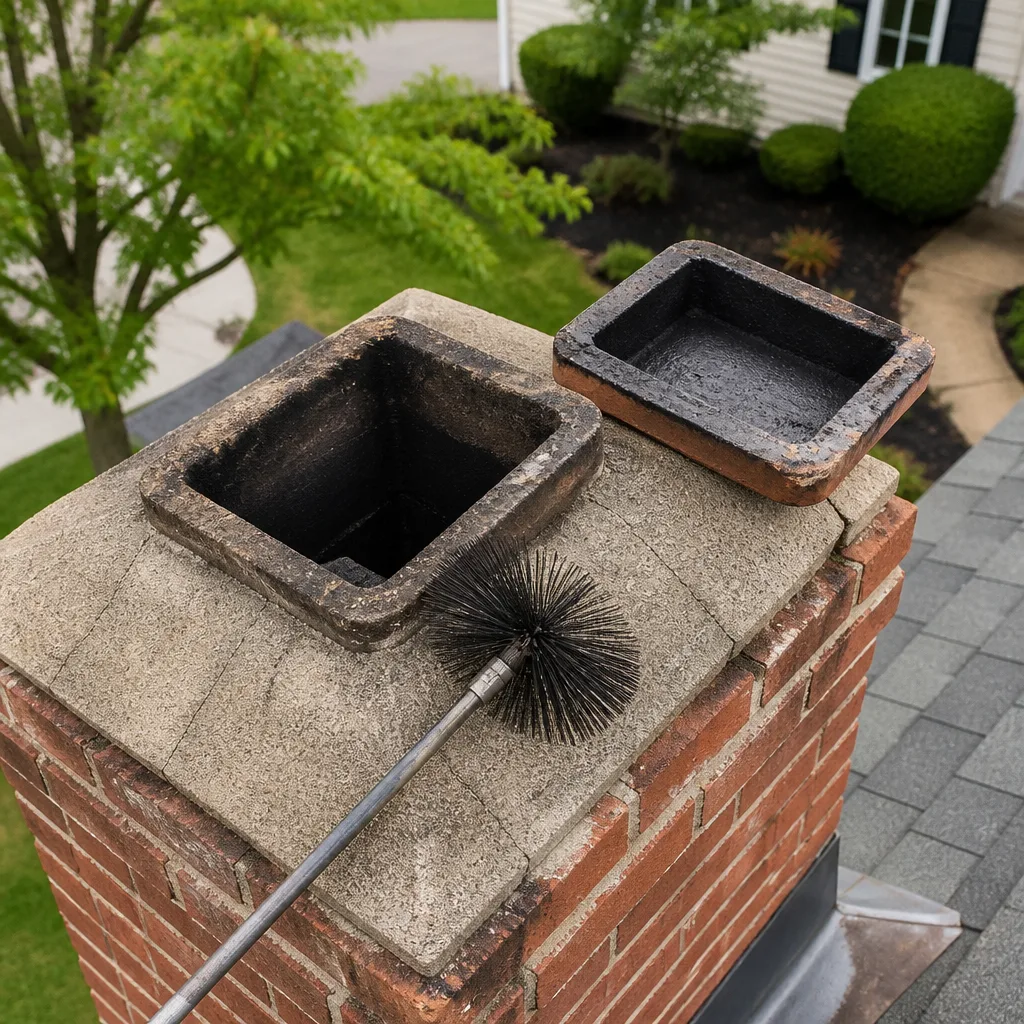 Sweep & inspection
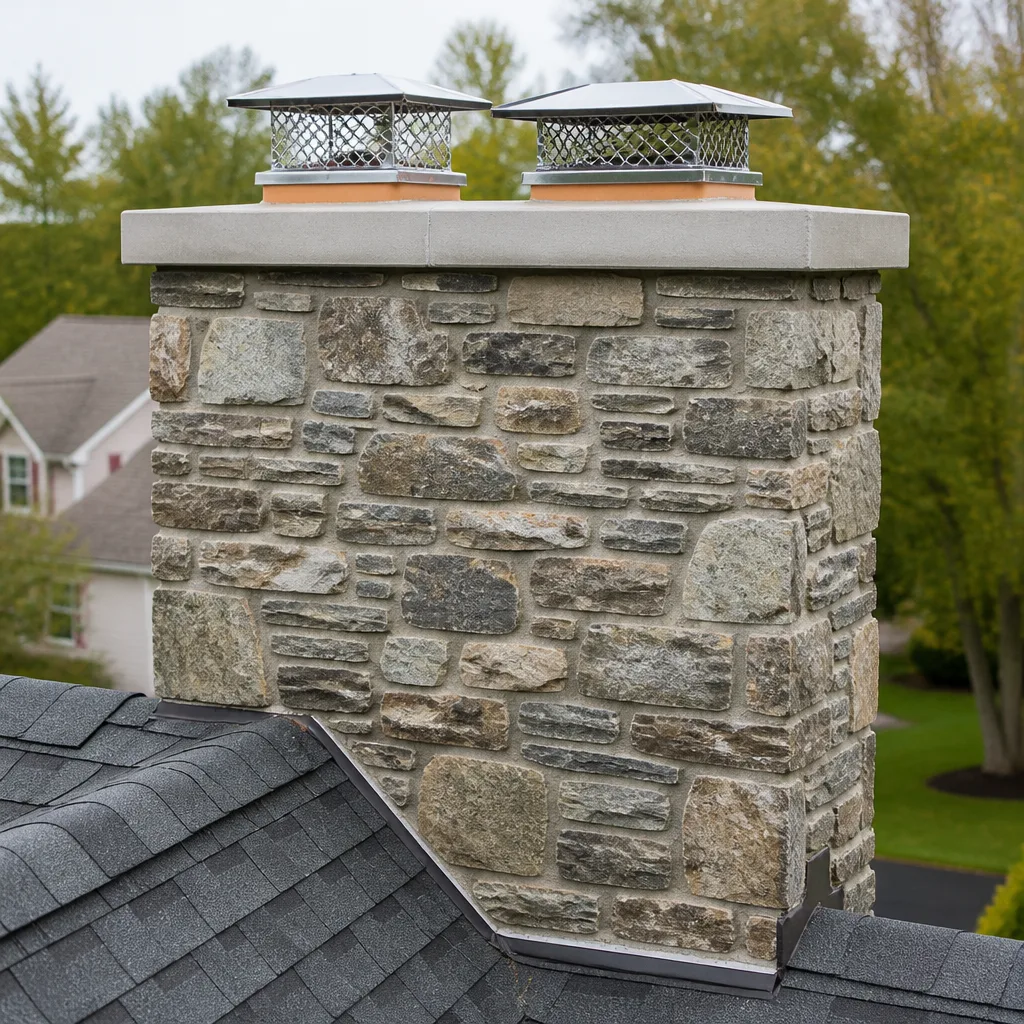 Caps & crowns
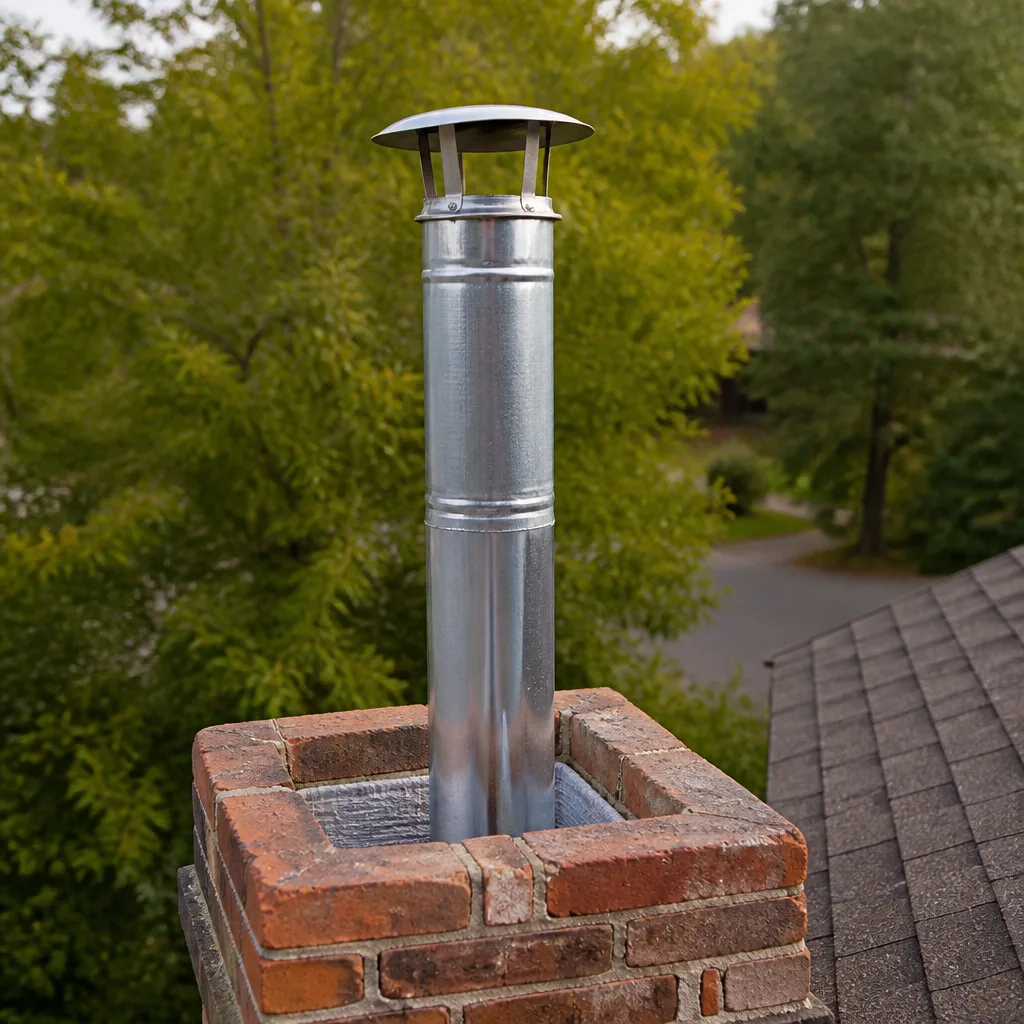 Flue relining
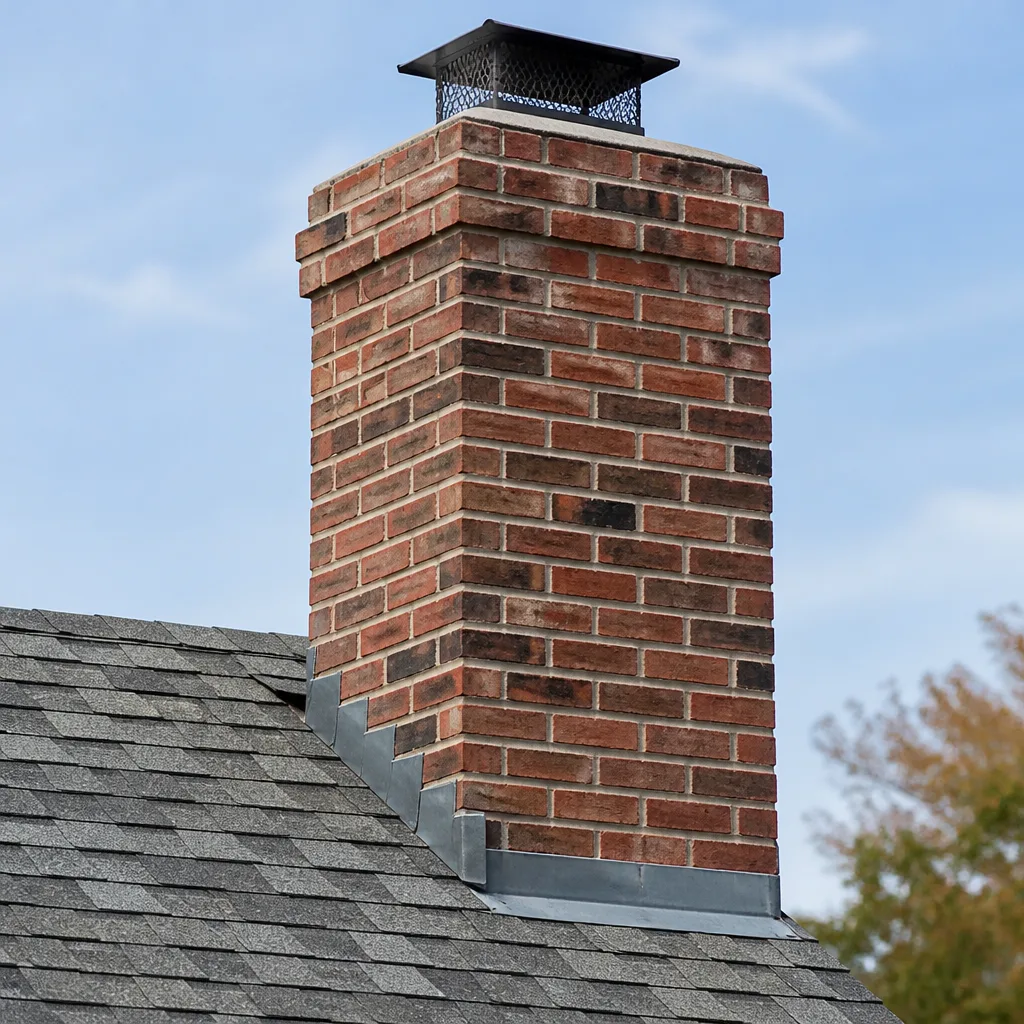 Masonry repair
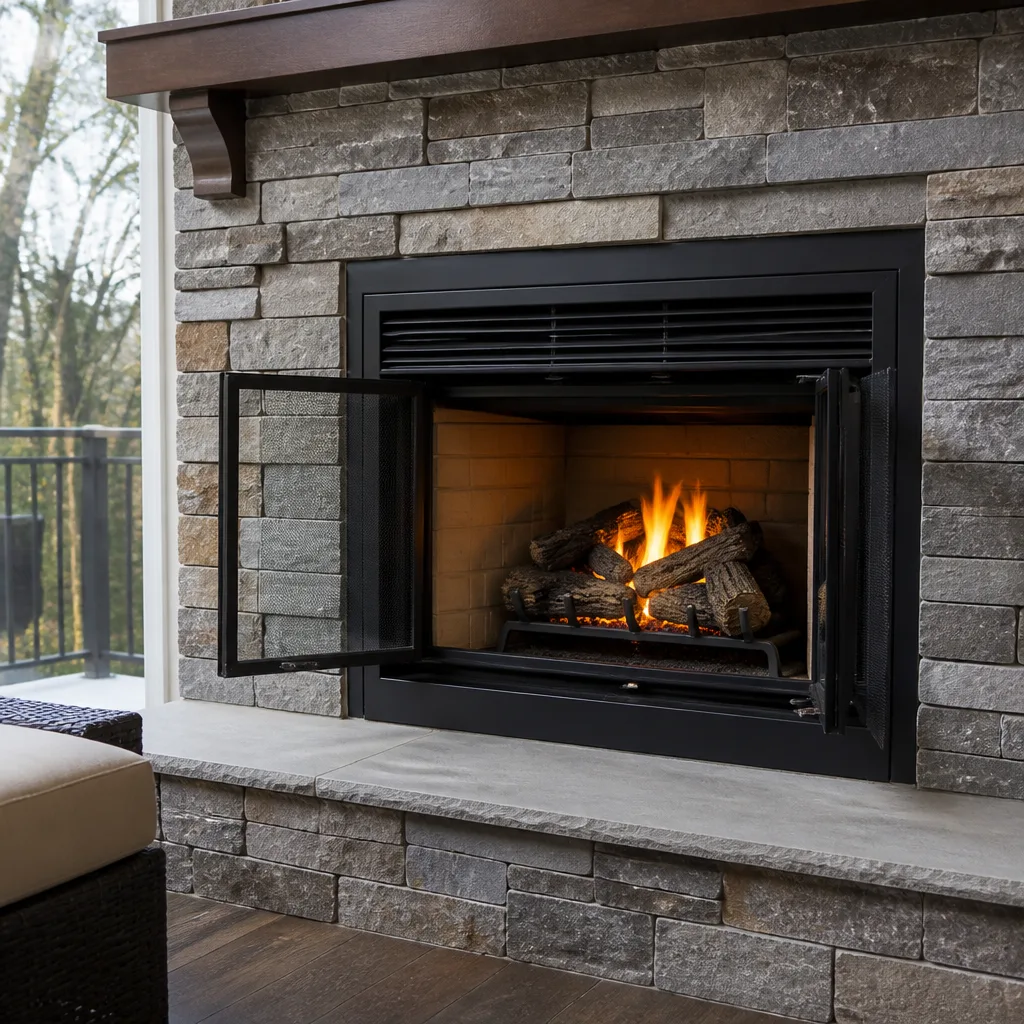 Gas fireplace service
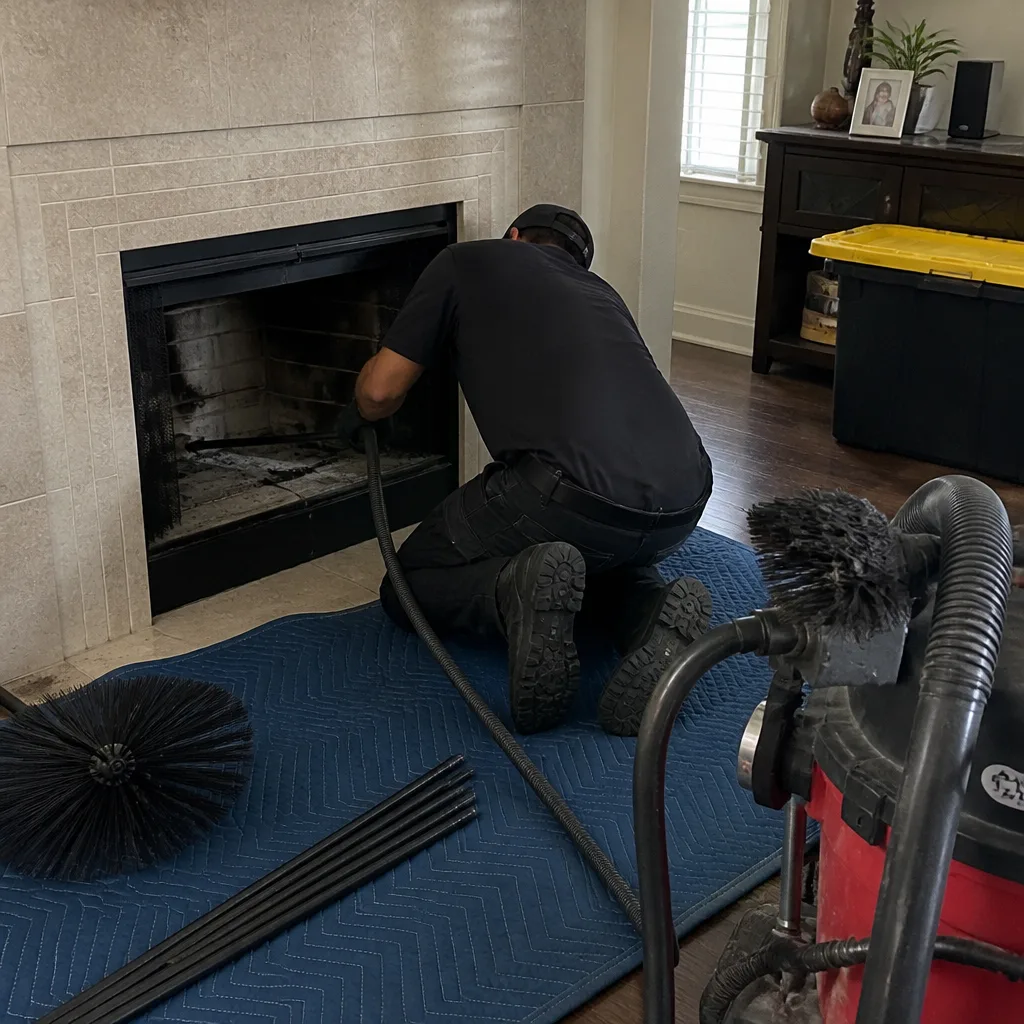
Level 1 sweep and inspection to the NFPA 211 annual standard - flue, crown, cap, and flashing checked and photographed
Chimney sweep logs do not sweep chimneys. They loosen some creosote - which then falls where a brush and vacuum still have to collect it.
Chimney Cleaning Permits, Codes & Inspections in NV: What You Need to Know
Here’s a number most Las Vegas homeowners never see coming: roughly 40% of chimney-related permit applications in Clark County come from home sellers, not from contractors or repair companies. That’s because listing disclosures and home inspections routinely surface work that was done years earlier without a permit, and the seller has to fix the paperwork before escrow can close. This guide walks you through exactly where the permit line sits, what NFPA 211 actually requires, how to verify past chimney work, and which Clark County office holds the records. If you own a fireplace in Las Vegas, you’ll want to know this before you need it.
Quick Answer
Routine chimney sweeping and Level 1 inspections in Nevada do not require a permit of any kind. Permits become necessary only when work crosses into repair, relining, structural modification, or appliance replacement. The governing standard is NFPA 211, and in Las Vegas the authority is Clark County Building Department. A standard chimney sweep in Las Vegas typically runs $180 to $320 before any repairs, and no permit is needed for that service. For a full overview of what’s involved, see our The Complete Guide to Chimney Cleaning in Las Vegas.
Styles & brands we work with
Table of Contents
- The Permit Line: Cleaning vs. Repair in Nevada
- What NFPA 211 Actually Is (Without the Jargon)
- Las Vegas and Clark County Code: Local Rules That Matter
- The Three Levels of Chimney Inspection Explained
- When a Chimney Inspection Triggers a Seller Disclosure
- How to Check If Past Chimney Work Was Permitted
- Insurance, Permits, and the Claim Problem
- Real Costs in the Las Vegas Chimney Market
The Permit Line: Cleaning vs. Repair in Nevada
Here’s the line that matters: sweeping, brushing, vacuuming, and visual inspection are classified as maintenance. Maintenance requires no permit anywhere in Nevada, including Las Vegas, Henderson, North Las Vegas, and unincorporated Clark County. The moment a technician removes a component, cuts into masonry, installs a liner, rebuilds a firebox, or replaces a damper assembly, the work becomes a repair or alteration. And repairs and alterations do require a permit in Clark County.
This distinction surprises a lot of Las Vegas homeowners. We’ve had customers in Summerlin and Green Valley who assumed a chimney reline was just “a deeper cleaning” because the contractor described it that way. It wasn’t. Replacing a clay tile flue liner or installing a stainless steel liner system changes the venting dynamics of the appliance. Clark County treats that as an alteration to a fuel-burning appliance vent, and it needs to be permitted and inspected.
Here’s a practical breakdown of what falls on which side of the line:
- No permit required: chimney sweeping, creosote removal, Level 1 visual inspection, smoke test, camera inspection of the flue, minor masonry pointing of less than 10 square feet, cap and screen replacement that fits the existing flue.
- Permit required: flue liner installation or replacement, firebox rebuild, smoke chamber parging or repair, damper replacement, chimney crown rebuild, structural masonry repair beyond cosmetic pointing, any alteration to the chimney’s height or cross-section, converting a wood-burning fireplace to gas, or installing a new fireplace insert.
In practice, what that means: a standard chimney sweep in Las Vegas is a no-permit job. A repair that touches the flue liner or firebox almost always needs paperwork. If you’re not sure which category your job falls into, Clark County Building Department’s permit technicians will answer the question directly over the phone.
What NFPA 211 Actually Is (Without the Jargon)
NFPA 211 is the National Fire Protection Association’s standard for chimneys, fireplaces, vents, and solid fuel-burning appliances. It was first published in 1901 and is updated every three years. In Nevada, it’s the reference standard that licensed inspectors and building officials cite when they evaluate chimney safety. Nevada adopts the most recent edition of NFPA 211 by reference through its building and fire codes.
What NFPA 211 does in plain English is this: it sets the minimum requirements for how a chimney must be built, maintained, and inspected to be considered safe. It’s not a law by itself, but it becomes enforceable when a state or county adopts it into code. Clark County has done exactly that.
The standard defines three levels of inspection, which we’ll cover below. It also specifies minimum clearances between a chimney and combustible materials (typically 2 inches for exterior chimneys, 1 inch for interior chimneys with proper clearance to combustibles), and it requires that chimneys serving wood-burning appliances be swept “when an appreciable accumulation of soot or creosote occurs.”
Here’s the part most homeowners care about: NFPA 211 does not require a sweep on a fixed annual schedule. What it requires is that the chimney be inspected annually, and swept when the buildup reaches a level that presents a hazard. In practice, a chimney that sees regular wood fires during a Las Vegas winter typically needs one sweep per season; watch for our Chimney Cleaning Warning Signs: A Las Vegas Homeowner’s Reference Guide to know when it’s time. A gas fireplace or gas log set may go several years between cleanings, but the annual inspection recommendation still applies.
If a Nevada inspector flags a chimney, they’re usually citing an NFPA 211 violation: cracked flue tiles, inadequate clearance, a missing cap, or creosote buildup. Knowing the standard’s name helps you understand the report you’re reading.
Las Vegas and Clark County Code: Local Rules That Matter
Las Vegas sits in Clark County, and building enforcement is split between the county and the individual cities. City of Las Vegas, Henderson, and North Las Vegas each operate their own building departments. Unincorporated areas, including large portions of the Las Vegas Valley, go through Clark County Building Department directly. All of them adopt versions of the International Residential Code (IRC) and International Mechanical Code (IMC), and all of them reference NFPA 211 for chimney work.
Here’s how the codes interact in practice:
- IRC Chapter 10 covers chimneys and fireplaces in residential construction. It sets structural requirements, flue sizing, and clearance rules.
- IMC Chapter 8 covers chimneys and vents connected to appliances, including gas fireplaces and inserts. If a gas fireplace is being installed or reconfigured, the IMC is the relevant chapter.
- IFC (Fire Code) Chapter 6 references NFPA 211 for maintenance and inspection of existing chimneys in occupied buildings.
One Las Vegas-specific point we wish more homeowners knew: the desert climate does not exempt your chimney from water intrusion rules. A chimney crown that cracks under 110-degree summer heat then freezes on a January night will fail the same way it fails in Boston. The difference is that Las Vegas homeowners are less likely to see the early signs because they use their fireplaces for a shorter season. That’s one reason an annual chimney inspection in Las Vegas is worth more here than in colder markets: the damage accumulates during months when nobody is looking at the chimney.
Clark County also enforces the EPA’s requirements for wood-burning appliances. Clark County has not enacted a full wood-burning ban like some California counties, but it does participate in a winter-time advisory program where voluntary no-burn days are issued during particularly stagnant-air stretches. Any new wood-burning fireplace or insert installed in the Las Vegas Valley must meet current EPA particulate emission standards.
The Three Levels of Chimney Inspection Explained
When someone in Las Vegas says “chimney inspection,” they are talking about one of three levels defined by NFPA 211. The level determines what gets checked, how it gets checked, and what the report covers. Here’s how they work:
- Level 1 (visual inspection): The technician examines the readily accessible portions of the chimney, inside and out. This includes the flue interior (as far as can be seen from above and below), the firebox, the damper, the chimney cap, and the exterior masonry. This is the inspection that goes along with a routine sweep. No tools are used to access concealed areas. A Level 1 is appropriate when the chimney is being used in the same way it’s always been used, with the same fuel.
- Level 2 (camera inspection): This is required when there’s been a change: a new appliance, a new liner, a fuel conversion (wood to gas), a chimney fire, a lightning strike, a real estate transaction, or a change in the system’s use. The technician runs a camera through the full length of the flue and examines the crown, the cap, and the connection to the appliance. A Level 2 is what Clark County requires as part of a real estate transfer for any home with a fireplace. The photos are what makes it possible for someone to show you exactly why a repair is recommended.
- Level 3 (invasive inspection): This happens when a Level 1 or Level 2 reveals a problem that can’t be fully diagnosed from the accessible surfaces, or when the chimney’s structural integrity is in question. The technician may need to open a section of wall or ceiling, remove a fireplace surround, or access a concealed portion of the flue. Level 3 inspections are rare in residential work and almost always follow a chimney fire, an obvious structural failure, or a home purchase where the buyer’s Level 2 revealed something serious.
In the Las Vegas market, the most common inspection we perform is the Level 2, because so much local chimney work is tied to real estate transactions. The second most common is the Level 1 that comes with an annual sweep. If you’re buying a home with a fireplace in Summerlin, Henderson, or anywhere in the Valley, the lender or the home inspector will typically require a Level 2 chimney inspection before close.
When a Chimney Inspection Triggers a Seller Disclosure
Nevada law requires sellers to disclose known material defects on the Seller’s Real Property Disclosure Form. Here’s the key point: once a chimney inspection report exists and has been shared with the seller or their agent, the findings become known facts. The seller can no longer claim ignorance.
That means a $200 chimney inspection in Las Vegas can force a $4,000 repair disclosure. If the inspection shows a cracked flue liner, the seller must either repair it, credit the buyer, or disclose it and negotiate a price reduction. Many Las Vegas sellers learn this the hard way, particularly in a market that has cooled from its 2021 peak and where buyers are more willing to demand concessions.
Here’s the sequence we see repeatedly in Las Vegas real estate transactions:
- The buyer orders a home inspection, which flags the fireplace as “further review recommended.”
- The buyer (or the agent) requests a Level 2 chimney inspection.
- The Level 2 finds what the general home inspector suspected: damaged flue tiles, missing mortar joints, or an improperly installed gas log set.
- The report goes to the seller. Under Nevada disclosure law, the seller now knows about the defect.
- The seller must disclose it on the SPD form and either fix it or negotiate. Hiding it at that point is fraud, and Nevada real estate attorneys see those cases.
For sellers: getting a Level 2 inspection before listing gives you two advantages. First, you control the timeline and the contractor. Second, you can repair the issue on your terms rather than in the middle of escrow with the buyer’s inspector and the closing clock running. For buyers: never accept a seller’s pre-listing inspection as the final word. Order your own, and specifically request camera verification of the flue condition.
How to Check If Past Chimney Work Was Permitted
This is the question we hear most from Las Vegas buyers after a Level 2 inspection reveals a reline or repair: “Was any of this permitted?” The good news is that Clark County makes this reasonably easy to check. Here’s the process:
- Determine the jurisdiction. Was the home in the City of Las Vegas, Henderson, North Las Vegas, or unincorporated Clark County? The address determines which building department holds the records.
- Search the permit database online. Clark County Building Department has an online permit search tool (the “Citizen Access” portal) where you can search by address. City of Las Vegas and Henderson have their own equivalent portals. Search the property address and review every permit on record for the past 15 to 20 years.
- Look for the specific trade permits. A chimney reline falls under mechanical (appliance vent work) or sometimes building (structural masonry) categories. The permit record should describe the scope of work.
- Check the status. A permit that was issued but never had a final inspection is considered “open” or “expired.” That’s the flag. An open permit means the work may or may not have been done correctly, and the county never verified it.
- If you find nothing, call the records desk. Explain that you’re researching a property and ask whether any chimney, fireplace, or mechanical vent permits were ever issued for the address. Have the parcel number ready; it speeds up the search.
For City of Las Vegas properties, the permit counter is at 333 N. Rancho Drive. For unincorporated Clark County, it’s the Clark County Government Center at 500 S. Grand Central Parkway. Henderson’s building department is at 240 S. Water Street. All three departments will verify permit history for prospective buyers at no charge.
One caution from our experience in Las Vegas: “no permit on record” does not automatically mean the work was done illegally. Clark County permit records for work done more than 20 years ago are spotty, especially in older neighborhoods like Paradise, Winchester, and the historic districts. If a 1990s-era reline shows no permit, the practical answer is to have a Level 2 inspection verify the work is safe, rather than chasing a paper trail that may never surface.
Insurance, Permits, and the Claim Problem
The opening hook of this guide wasn’t hypothetical. It’s a pattern we’ve seen repeat in the Las Vegas Valley: a homeowner pays for a chimney reline, the contractor doesn’t pull a permit, and years later a smoke-damage or fire claim is denied because the insurer determined the unpermitted alteration contributed to the loss.
Why do insurers care? Because a permit creates a record that a qualified third party, the county inspector, verified the work. Without that record, the insurer has no proof the reline met the existing chimney’s requirements. The insurer’s argument in a claim is simple: if a proper permit had been pulled and the work inspected, the defect that caused the loss would have been caught. Therefore the loss is excluded.
Here’s what to do to protect yourself in Las Vegas:
- Ask the contractor if a permit is required before you sign anything. If they say no and the work is a reline, rebuild, or insert installation, get a second opinion from Clark County Building Department directly.
- Require the permit number in the written contract. A contractor who pulls a permit has a permit number. If they can’t provide one before starting permitted work, walk away.
- Verify the permit was finalized. A permit that was pulled but never had a final inspection is nearly as bad as no permit at all. Check the status in the county portal after the work is complete.
- Keep the inspection report. When the county inspector signs off, you get a record. File it with your home documents. That’s the paper your insurer will want if a claim ever arises.
This applies to the common Las Vegas repair scenarios we outlined earlier. A chimney sweep needs no permit and generates no insurance exposure. A flue reline requires a permit and absolutely generates exposure if skipped. When in doubt, the question to ask your contractor is: “Will this work affect my insurance?” If the answer is, “Don’t worry about it,” that’s not an answer. That’s a red flag.
Real Costs in the Las Vegas Chimney Market
Here are the numbers we quote over the phone in Las Vegas. They’re current for the Valley, they’re what we charge, and they’re in line with what a reputable company should charge. If someone quotes dramatically under or over these ranges, ask why.
- Standard chimney sweep (Level 1 inspection included): $180 to $320. The variance depends on flue size, accessibility, and the amount of creosote. A heavily glazed flue takes longer and costs more.
- Level 2 camera inspection (standalone): $250 to $450. This includes the full video report. This is the inspection Las Vegas buyers typically need during escrow.
- Stainless steel liner installation (permitted): $3,800 to $7,500 depending on flue height, roof pitch, and the specific liner system. Materials like DuraFlex and Olympia Chimney liner components make up a meaningful share of that cost, which is why cheap quotes usually mean cheaper materials.
- Firebox rebuild (permitted): $2,500 to $5,000 depending on scope. A partial rebuild of the firebox floor is less; a full rebuild including the smoke chamber is more.
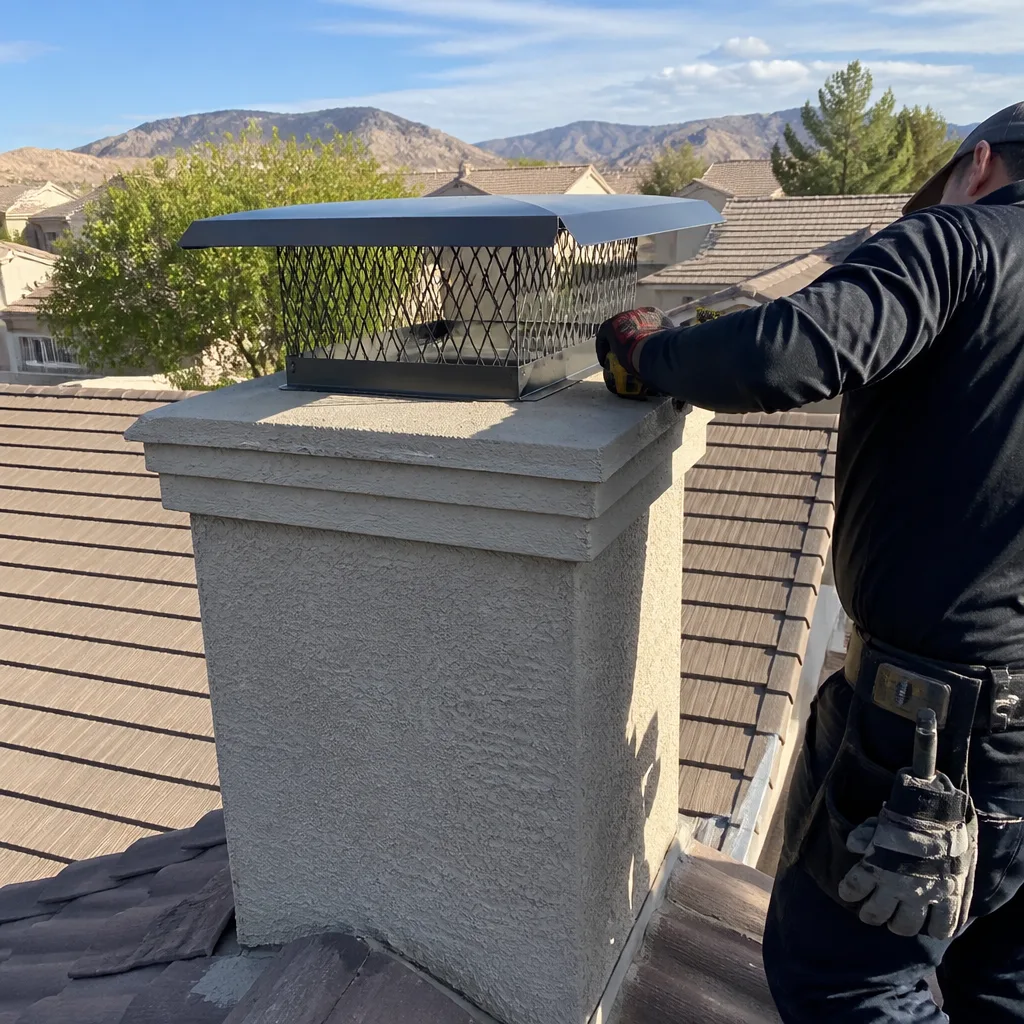
- Chimney cap and screen replacement: $150 to $450, no permit required.
- Gas fireplace service and repair: $150 to $500 for most repairs. A full replacement runs $2,500 to $6,000 installed. Gas fireplace repair in Las Vegas is a different scope than chimney work, but the same permit logic applies if the unit is being replaced or the venting is being changed.
The cost difference between a sweep and a repair is why the permit line matters so much. A $250 cleaning is maintenance and needs no paperwork. A $5,000 reline is an alteration and does. If a Las Vegas contractor tells you a reline doesn’t need a permit because “it’s just like a sweep, just deeper,” they are telling you something that Clark County would disagree with.
Common Mistakes to Avoid
- Treating a reline as a cleaning. A flue liner replacement $4,000+ is not a $250 sweep. It requires a permit in Clark County, and pretending otherwise puts your insurance at risk. The county sees it as an alteration to a fuel-burning appliance vent.
- Skipping the Level 2 inspection when buying a Las Vegas home. A general home inspector often flags “further review” on a fireplace. Buyers who skip the Level 2 to save time often discover a cracked flue or missing liner in the first winter and have no recourse against the seller.
- Using a contractor who won’t pull the permit they’re legally required to pull. We’ve seen this in every part of the Valley. It saves the contractor time and maybe $200 in fees, and it transfers all the risk to you, the homeowner.
- Assuming “no permit on record” means “no permit was required.” Older homes in Las Vegas have incomplete public records. The right move is a Level 2 inspection to verify the actual condition, not a deep-dive into a paper trail that may predate digital records.
- Ignoring the seller disclosure implications of an inspection you already ordered. Once the report exists, the defect is known. Sellers who order an inspection before listing and then don’t disclose the findings are creating a legal exposure in Nevada. The proper path is to repair or disclose.
- Annual inspection being treated as optional paperwork. NFPA 211 recommends annual inspection of all chimneys, including gas fireplaces, even in a climate like Las Vegas where the burn season is short. The water intrusion and masonry damage that matters happens year-round.
See the difference
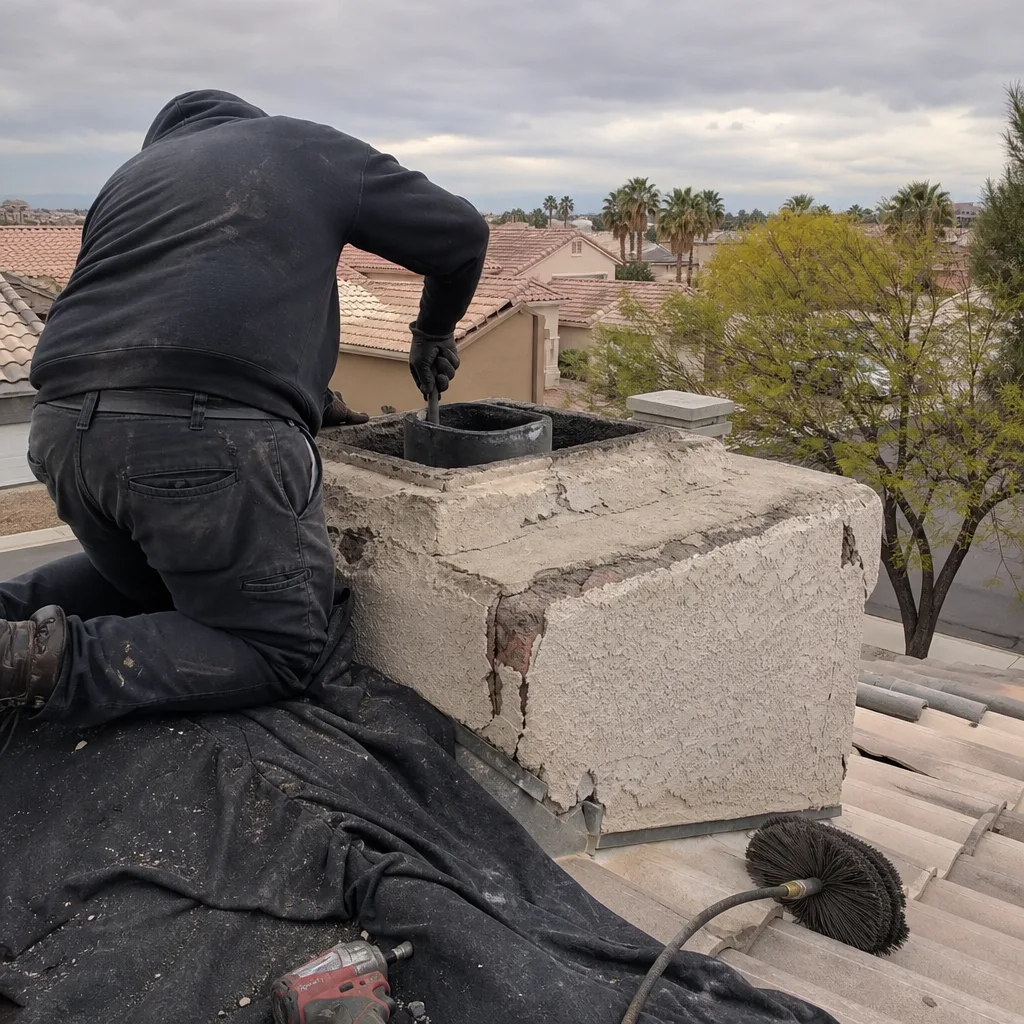 Before
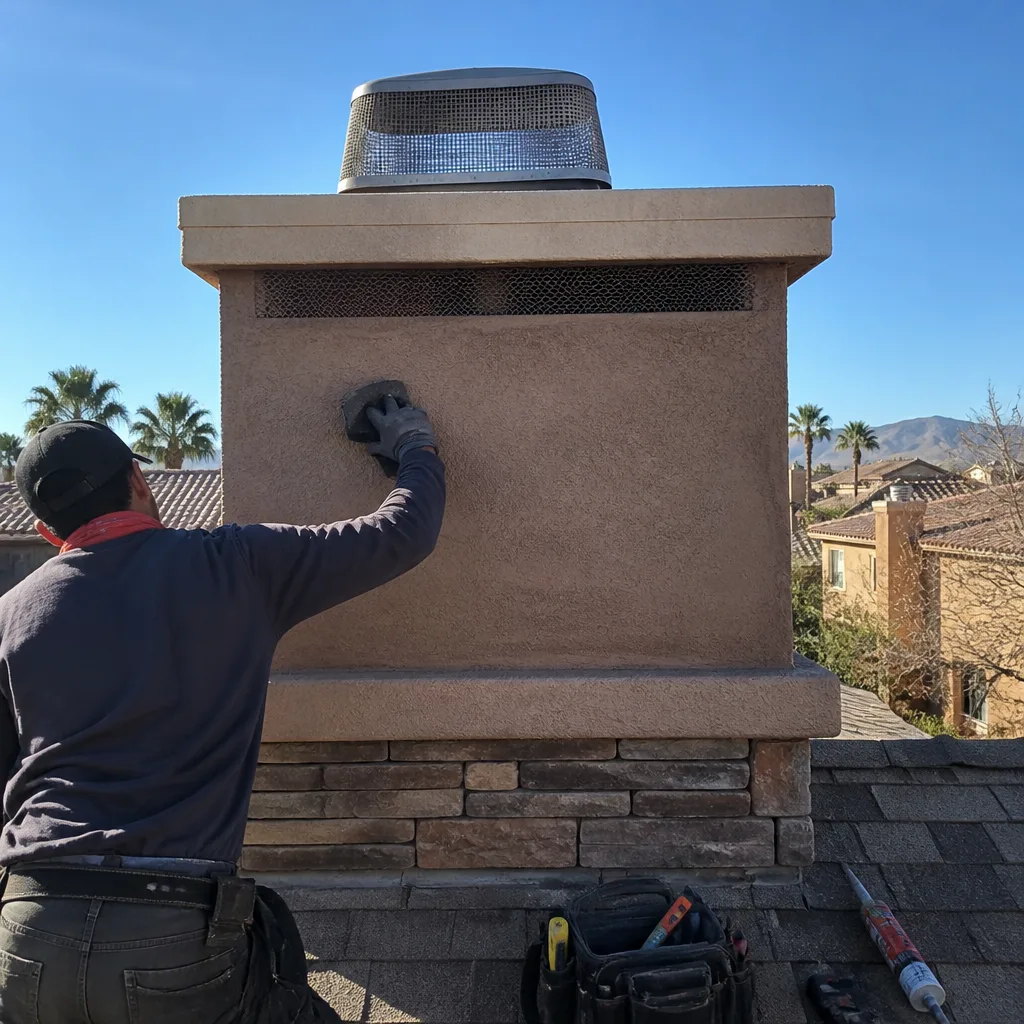 After
After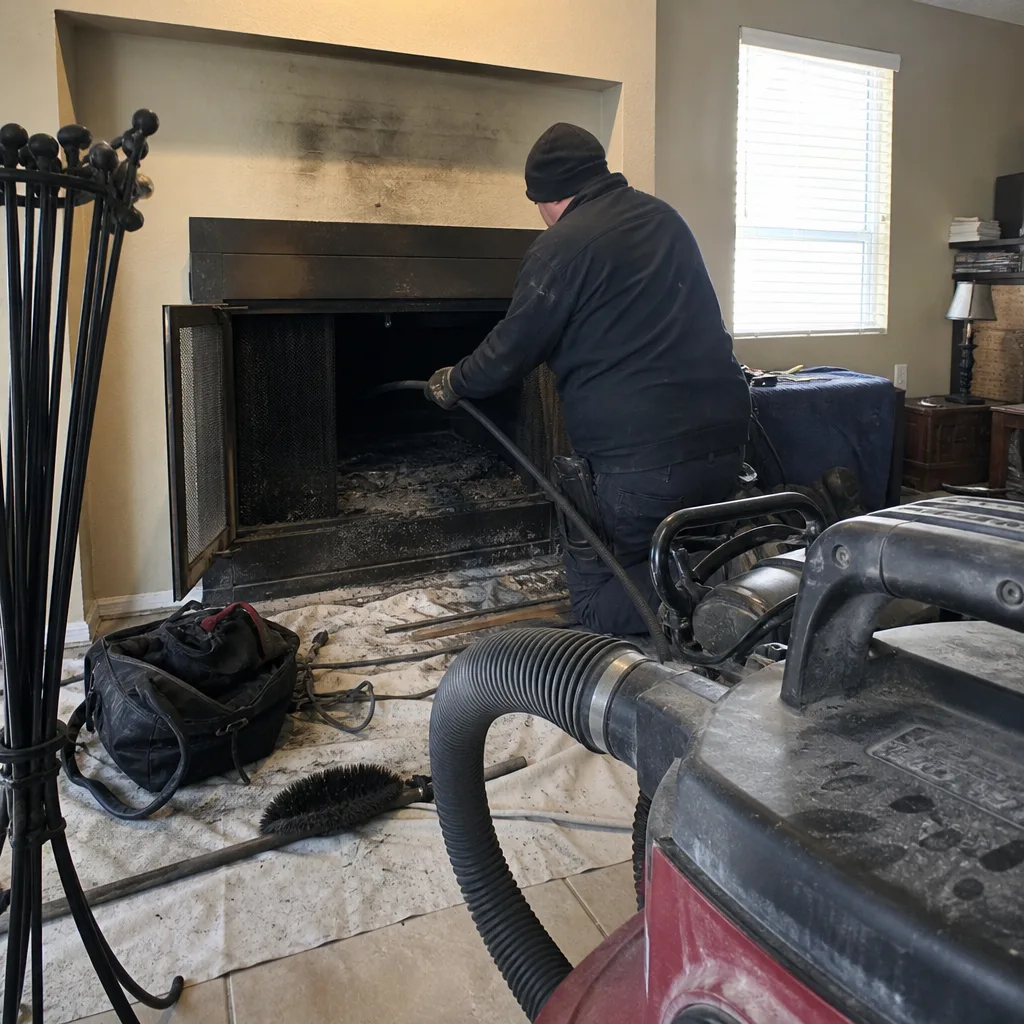 Before
 After
After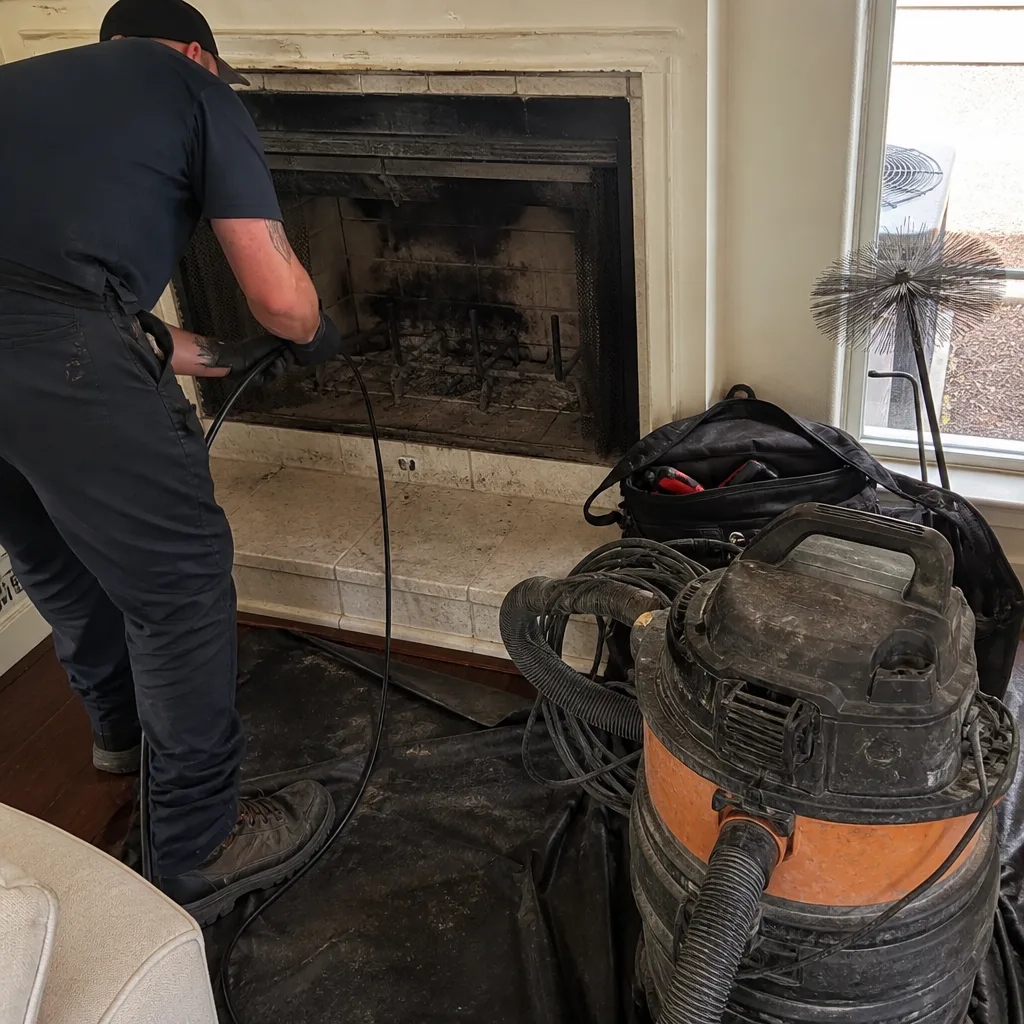 Before
 After
AfterWhen to Call a Professional
Call a licensed chimney professional when you see flaking masonry, rust on the firebox floor, a damper that won’t open or close, water stains on the ceiling near the chimney, or when you smell smoke in the house after the fire is out. Our Chimney Sweep Maintenance Checklist for Las Vegas Homeowners covers what to watch for each fall. Call when your gas fireplace produces a yellow flame instead of blue, or when the pilot won’t stay lit. Call after any chimney fire, no matter how small it seemed. And call before you buy a Las Vegas home with a fireplace, because the Level 2 inspection is the only way to know what the flue actually looks like. Alcott Chimney Las Vegas offers free estimates in Las Vegas, and we’ve been serving the Valley since 2002. Call (725) 227-7352 and a live person answers, at any hour.
Frequently Asked Questions
A standard chimney sweep in Las Vegas typically runs $180 to $320, including the Level 1 visual inspection that accompanies it. The range depends on flue size, roof accessibility, and creosote buildup. If your sweep quote comes back with a repair recommendation, ask for camera photos before you agree to anything. Call (725) 227-7352 for an exact quote, estimates are free.
No. Routine chimney sweeping, creosote removal, and Level 1 inspections are classified as maintenance and require no permit anywhere in Nevada, including Las Vegas and Clark County. The permit requirement begins when work crosses into repair or alteration, such as relining, rebuilding, or appliance replacement.
NFPA 211 is the National Fire Protection Association’s standard for chimneys, fireplaces, and vents. It is adopted by reference in Clark County and is the standard a Nevada inspector will cite when evaluating chimney safety. It defines inspection levels, clearance requirements, and the standards for chimney maintenance.
NFPA 211 requires a sweep whenever an appreciable accumulation of creosote or soot is present, which in Las Vegas typically means once per burn season for wood-burning fireplaces. Annual inspection is recommended for all chimneys, including gas. If you burn wood more than three nights a week during winter, you may need a mid-season sweep. Call (725) 227-7352 talk through your exact usage.
Yes. Clark County, City of Las Vegas, and Henderson all have online permit search portals where you can search by address. Look for mechanical or building permits describing chimney, fireplace, or vent work, and check whether the permit status is finalized. If you find an open or expired permit, the county never completed the final inspection.
You carry the risk. The immediate risk is an insurance claim denial if the unpermitted work contributes to a fire or smoke-damage loss. The secondary risk is at resale, when a buyer’s inspection uncovers the unpermitted work and you must either repair it properly or disclose it and reduce the sale price. Neither outcome is worth the $200 you save on permit fees.
The Bottom Line
Nevada’s chimney rules are cleaner than most homeowners assume. Cleaning and inspection: no permit, ever. Repair, reline, or alteration: permit required in Clark County, full stop. The standard that governs everything is NFPA 211, and the office that verifies compliance is Clark County Building Department (or your city’s equivalent). If you’re buying a Las Vegas home, order a Level 2 camera inspection and check the permit history before you close. If you’re selling, get the inspection first and disclose or repair on your terms. And if you’re just maintaining a fireplace you already own, an annual sweep and inspection every fall keeps you ahead of the Nevada disclosure, insurance, and safety rules that this guide covers. Browse our more guides & resources for year-round chimney care tips.
Written by Ruben Castellano, Owner at Alcott Chimney Las Vegas, serving Las Vegas since 2002.